
Screed vs Concrete: What's the Difference?
People use the words for the same thing, but they do different jobs. Concrete is the structure. Screed is the smooth, level layer that goes on top.
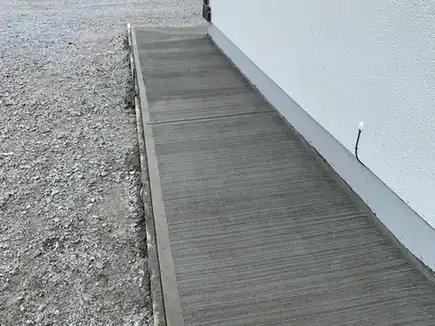
What concrete is
Concrete is cement, sand, water and coarse stones. It's strong, and it's used for slabs, foundations and structural floors. The surface is usually too rough and uneven to lay a finished floor straight onto.
What screed is
Screed is a finer mix: cement and sharp sand with no big stones, or a liquid screed. It's laid on top of the slab or the insulation to give a flat, level surface ready for tiles, timber, vinyl or carpet, and it's usually where the underfloor heating pipes go.
Why a slab still needs screed
- Slabs are rarely flat or level enough for a finished floor
- Underfloor heating pipes need to be covered, and screed does that
- Insulation goes on the slab, and the screed goes on the insulation
- Screed gives the tiler or floorer a true, smooth base
Typical floor build-up in a new Irish house
- Hardcore, compacted
- Sand blinding
- Damp-proof membrane and radon barrier, required on new homes in Ireland
- Concrete slab
- Insulation
- Underfloor heating pipes, if you're having them
- Screed
- Floor covering
The order can change with the design, so go by your engineer's or architect's drawings.
The mix is different
Concrete has coarse stones in it for strength. Screed is usually around one part cement to three to five parts sharp sand, with no big stones, which is what lets it be finished smooth and level. Liquid screeds are a different mix again, made to flow.
Polished concrete is a different job
Polished concrete floors are concrete slabs ground and polished as the finished floor. That's a specialist finish of its own. A screed is normally covered by tiles, timber, vinyl or carpet.
When you need both
Most new builds and extensions have both: a concrete slab, then insulation and underfloor heating, then screed. We pour slabs and foundations as well as screed, so one crew can do the lot.
From JAM Floor Screeding, Portlaoise. Over 20 years laying screed across Leinster. Figures here are typical guidance; your floor's spec and the manufacturer's data sheet always come first.
Questions we get asked
Can I lay tiles straight onto a concrete slab?
Sometimes, if the slab is flat and level enough, but most aren't. A screed or levelling compound gives a far better base.
Can screed be used as a structural floor?
No. Screed isn't made to carry structural loads. It sits on a slab or insulation that does.
Is screed cheaper than concrete?
They do different jobs, so it's rarely one or the other. Most floors need both.
Screeds mentioned in this guide
Concrete Floors & Foundations
As well as screed, we pour concrete: ground floor slabs, footings and foundations, garage floors and paths around the house.
More on concrete floors & foundations →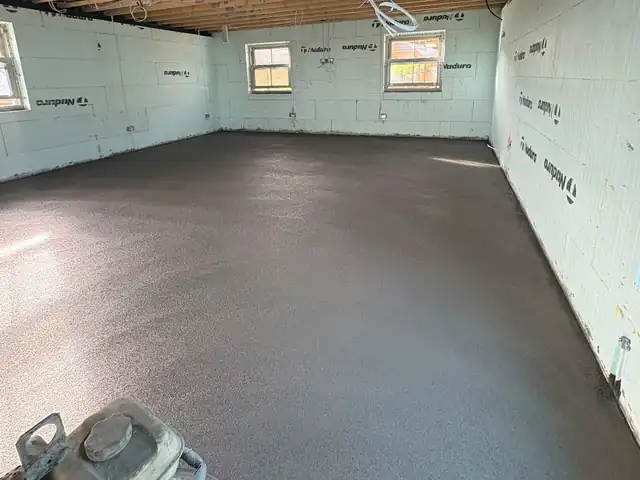
Sand and Cement Screed
Traditional sand and cement screed is our number one.
More on sand and cement screed →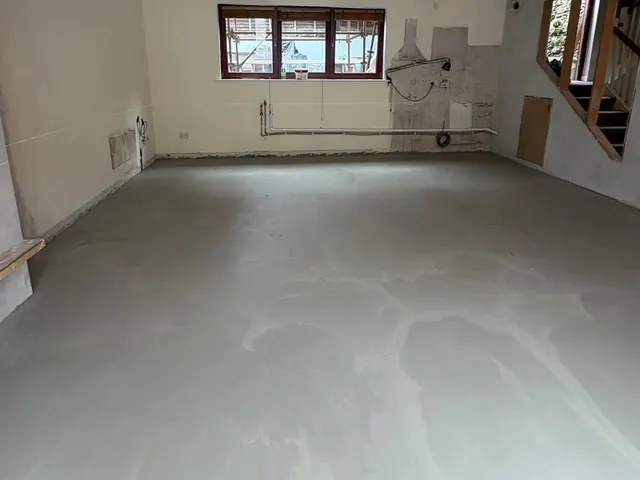
Floor Levelling
Uneven, sloping or patched floors levelled flat with latex screed, self-levelling compound or a bonded screed, ready for tiles, timber, vinyl or carpet.
More on floor levelling →More guides
How Much Does Floor Screeding Cost in Ireland?
Screeding is usually priced per square metre, but the rate depends on a handful of things about your floor.
Read the guide →GuideHow Long Does Screed Take to Dry?
There are two answers: when you can walk on it, and when it's dry enough for floor coverings.
Read the guide →GuideHow Much Screed Do You Need Over Underfloor Heating?
Get the depth wrong and you'll either crack the floor or slow the heating down.
Read the guide →Tell us about your floor
Send the details and we'll come back to you with a site visit and a price. The form opens WhatsApp with your message ready to send.
- Site visit before we price
- Clear price agreed before we start
- Laser-levelled finish
Rather talk? Ring 086 838 2613 or email info@jamfloorscreeding.com.