
Floor Levelling Compound vs Screed
Self-levelling compound is great for small dips and a smooth finish. It's the wrong tool for a floor that's badly out of level. Here's how to tell which one your floor needs.
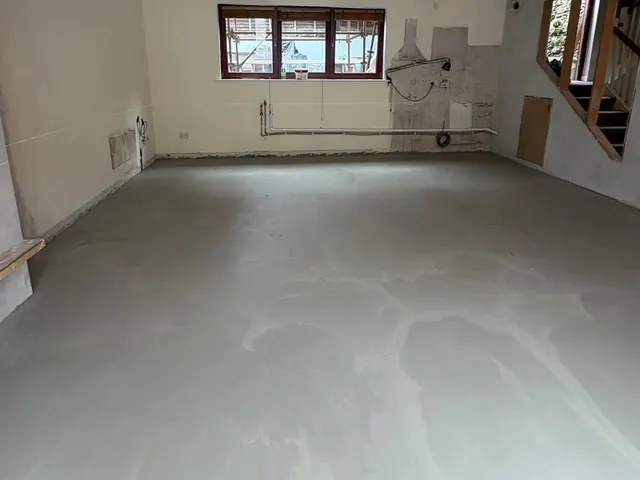
What levelling compound is for
Self-levelling compound, often called latex, is poured thin, usually a few millimetres, to give a smooth, flat surface before vinyl, LVT, carpet or tiles. It fills small dips and covers rough patches.
When you need a screed instead
- The floor is out by more than the compound's maximum depth
- The floor slopes from room to room
- Underfloor heating is going in
- The old floor is cracked, crumbling or hollow
Prep is where most jobs fail
Compound only bonds to a clean, sound, primed surface. Dust, old adhesive, paint and loose patches all stop it sticking, and that's when it cracks or lifts. Prime first, every time.
Bonded and polymer modified screed
For floors in between, a bonded or polymer modified screed goes down thinner than a standard screed and bonds hard to the old concrete. That's often the fix for renovations where floor height is tight.
Prepping a floor for levelling compound
- Scrape off old adhesive, paint and anything loose
- Fill cracks and holes, and fix any hollow patches
- Vacuum up all the dust
- Prime the floor with the primer the compound maker recommends
- Seal doorways so the compound stays where you want it
- Mix the full bag to the right water amount and pour quickly
Why levelling compound cracks or lifts
- No primer, or the wrong primer
- Dust or old adhesive under it
- Poured thicker than the product allows
- Too much water in the mix
- A moving floor underneath, like loose boards or a hollow screed
Levelling a timber floor
Timber floors move, so they usually need overboarding with plywood and a flexible levelling compound made for timber. A standard compound poured straight onto old floorboards will crack.
DIY or get it done?
A small room with a few dips is a reasonable DIY job with the right compound. Big floors, deep dips, or a floor going under expensive tiles or timber are worth getting done properly. We do floor levelling jobs of any size, even a single room.
From JAM Floor Screeding, Portlaoise. Over 20 years laying screed across Leinster. Figures here are typical guidance; your floor's spec and the manufacturer's data sheet always come first.
Questions we get asked
How thick can self-levelling compound go?
It depends on the product. Most are made for a few millimetres and some go thicker, so check the bag. Beyond that, you need a screed.
Do I need to prime before levelling compound?
Yes. Priming helps it bond and stops the old floor sucking the water out of the compound too fast.
Can you level a floor with underfloor heating in it?
That usually needs a screed, laid at the right depth over the pipes. See our guide to screed over underfloor heating.
Screeds mentioned in this guide
Floor Levelling
Uneven, sloping or patched floors levelled flat with latex screed, self-levelling compound or a bonded screed, ready for tiles, timber, vinyl or carpet.
More on floor levelling →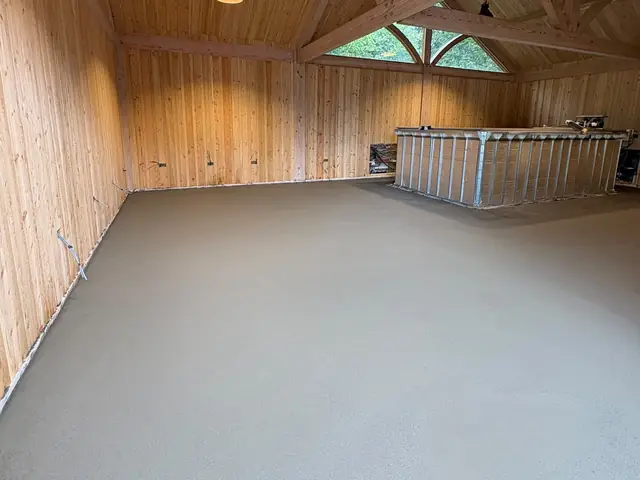
Polymer Modified Screed
Polymer modified screed is the fix when floor height is tight.
More on polymer modified screed →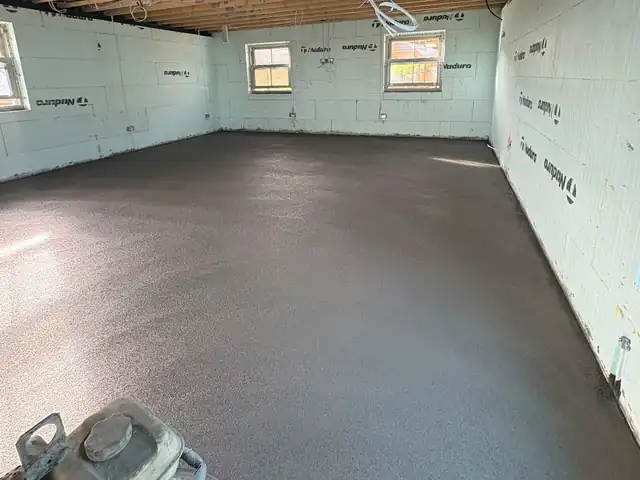
Sand and Cement Screed
Traditional sand and cement screed is our number one.
More on sand and cement screed →More guides
How Much Does Floor Screeding Cost in Ireland?
Screeding is usually priced per square metre, but the rate depends on a handful of things about your floor.
Read the guide →GuideHow Long Does Screed Take to Dry?
There are two answers: when you can walk on it, and when it's dry enough for floor coverings.
Read the guide →GuideHow Much Screed Do You Need Over Underfloor Heating?
Get the depth wrong and you'll either crack the floor or slow the heating down.
Read the guide →Tell us about your floor
Send the details and we'll come back to you with a site visit and a price. The form opens WhatsApp with your message ready to send.
- Site visit before we price
- Clear price agreed before we start
- Laser-levelled finish
Rather talk? Ring 086 838 2613 or email info@jamfloorscreeding.com.