
How Much Screed Do You Need Over Underfloor Heating?
Get the depth wrong and you'll either crack the floor or slow the heating down. Here's how the depth is worked out, with typical figures for each type of screed.
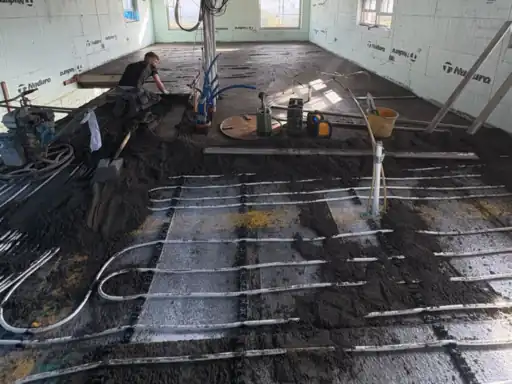
Typical depths
- Sand and cement screed laid floating over insulation: usually at least 65mm in homes and 75mm on commercial floors
- Liquid screed: often 35mm to 50mm, depending on the product and whether it's a home or a commercial floor
- Cover over the pipes: typically at least 25mm above the pipes for liquid screed, and around 45mm or more for sand and cement
These are typical figures, not a spec for your floor. The screed manufacturer's data sheet and your underfloor heating designer set the final depth.
Why too thin is a problem
A screed that's too thin over the pipes can crack as the heating warms up and cools down every day, and you can get hot stripes across the floor.
Why too thick is a problem
Extra depth means extra weight, more material, longer drying and a slower heating response. It can also push the finished floor above the door thresholds.
Getting the whole build-up right
The depth has to work with everything else in the floor: the slab, the insulation, the pipes, the screed and the floor covering, finishing level with the thresholds. We check all of that at the site visit, before we price. More on our underfloor heating screed work.
Typical underfloor heating build-up
- Concrete slab with a damp-proof and radon membrane underneath
- Rigid insulation boards
- Edge strip around every wall so the screed can expand
- A membrane or the system's clip board over the insulation
- Underfloor heating pipes, clipped or stapled down
- Screed, laid to the right depth over the pipes
- The floor covering
Keep the pipes in place
With liquid screed, pipes that aren't fixed down well can float up during the pour and end up too close to the surface. Pipes should be clipped or stapled at the right spacing before we arrive, and the system kept under pressure while we pour.
Joints in bigger floors
Large heated floors usually need movement joints, often where the heating zones or doorways are, so the screed can expand and contract without cracking. Your underfloor heating designer or the screed spec will show where they go.
Heating up for the first time
Don't turn the heating straight up. Once the screed has cured, the water temperature is brought up gradually over days, following the screed and heating manufacturers' schedule. Rushing this is one of the main causes of cracked heated floors. Our drying time guide covers the wait.
Liquid or sand and cement over underfloor heating?
Both work. Liquid screed flows tight round the pipes with no air gaps and can be laid thinner, so the floor warms up quicker. Sand and cement is the traditional all-rounder. See our guide to liquid vs sand and cement screed.
From JAM Floor Screeding, Portlaoise. Over 20 years laying screed across Leinster. Figures here are typical guidance; your floor's spec and the manufacturer's data sheet always come first.
Questions we get asked
What's the minimum screed over underfloor heating pipes?
It depends on the product. Typically at least 25mm of cover over the pipes for liquid screed, and more for sand and cement. Always go by the manufacturer's spec.
Does screed depth affect how fast the heating warms up?
Yes. A thinner screed warms up and responds quicker, which is one reason liquid screed is popular with underfloor heating.
Do the pipes need testing before screeding?
Yes. The pipes should be pressure tested before we pour, and ideally kept under pressure during the pour so any damage shows up straight away.
Screeds mentioned in this guide
Underfloor Heating Screed
Most of the floors we lay go over underfloor heating.
More on underfloor heating screed →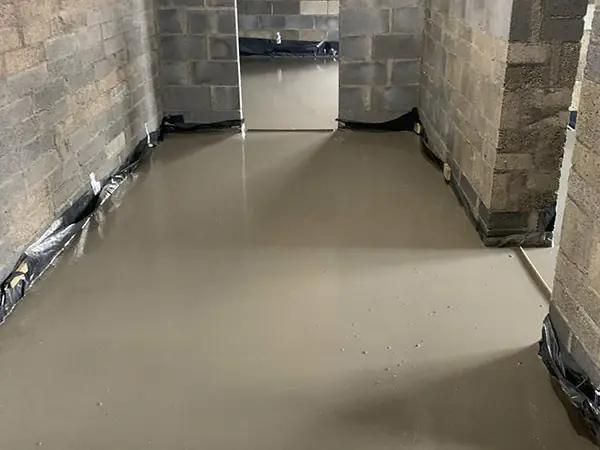
Liquid Screed
Cement-based liquid screed, pumped in and poured fast.
More on liquid screed →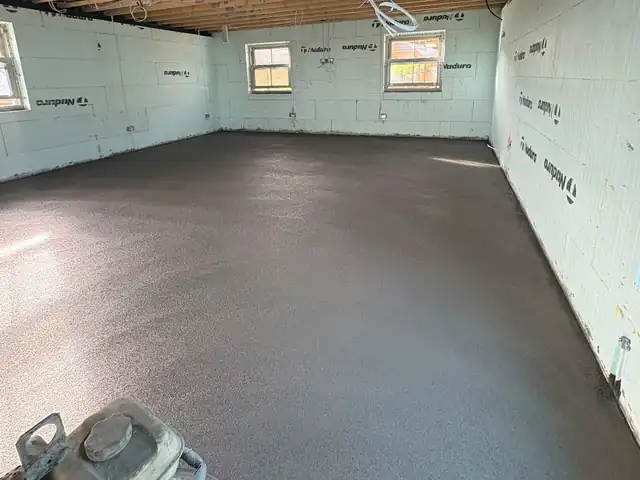
Sand and Cement Screed
Traditional sand and cement screed is our number one.
More on sand and cement screed →More guides
How Much Does Floor Screeding Cost in Ireland?
Screeding is usually priced per square metre, but the rate depends on a handful of things about your floor.
Read the guide →GuideHow Long Does Screed Take to Dry?
There are two answers: when you can walk on it, and when it's dry enough for floor coverings.
Read the guide →GuideTypes of Floor Screed, and Which One You Need
There's no single best screed.
Read the guide →Tell us about your floor
Send the details and we'll come back to you with a site visit and a price. The form opens WhatsApp with your message ready to send.
- Site visit before we price
- Clear price agreed before we start
- Laser-levelled finish
Rather talk? Ring 086 838 2613 or email info@jamfloorscreeding.com.