
Liquid Screed vs Sand and Cement Screed
They're the two screeds most houses end up choosing between. Both make a good floor. Which one is right comes down to your floor size, your heating and your timeline.
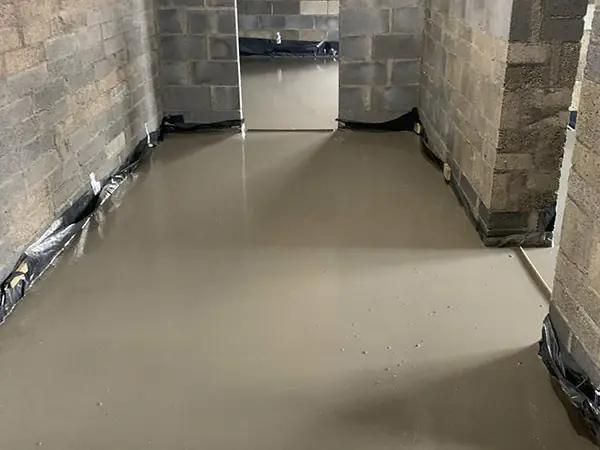
Side by side
| Liquid screed | Sand and cement screed | |
|---|---|---|
| How it goes down | Pumped in as a liquid, self-levels | Pumped in, then spread and levelled by hand |
| Speed on big floors | Very fast, a full house in a day | Slower, especially over big areas |
| Underfloor heating | Flows tight round the pipes, no air gaps | Works well when properly compacted round the pipes |
| Typical depth | Often thinner | Usually thicker |
| Drying | Thinner floors dry quicker; some products can be force-dried | About a millimetre a day for the first 40mm |
| Floor prep | Sealed membrane and edge strip so it can't leak | More forgiving of the base |
| Best for | Big open-plan floors with underfloor heating | Most houses, extensions and smaller rooms |
When we'd recommend liquid screed
Large open-plan ground floors, extensions with underfloor heating, and jobs where you want the heating to respond quickly. More on liquid screed.
When we'd recommend sand and cement
Most houses, smaller rooms, floors with lots of different levels, and sites where a liquid pour isn't practical. More on sand and cement screed.
What the site needs before a liquid pour
- Insulation down and the membrane taped and sealed so the screed can't run under it
- Edge strip around every wall
- Underfloor heating pipes clipped down so they can't float
- Doorways and openings blocked off so the screed stays in the room
- Doors and windows in, to keep the weather off while it cures
How it affects the heating
Because liquid screed sits tight round the pipes and is usually thinner, the floor tends to warm up and respond faster. That suits heat pumps, which run at lower temperatures for longer. Sand and cement works well too when it's properly compacted round the pipes.
Value, not just price
Liquid often costs more in material, but it can save time on the day and on the build programme, and a thinner floor can mean less excavation and insulation height. On a small or awkward floor, sand and cement is usually the better value. More on what decides the price.
Short on time?
If the floor coverings need to go down quickly, look at fast dry screed, or read our guide to screed drying times.
From JAM Floor Screeding, Portlaoise. Over 20 years laying screed across Leinster. Figures here are typical guidance; your floor's spec and the manufacturer's data sheet always come first.
Questions we get asked
Is liquid screed stronger than sand and cement?
Both are strong enough for homes when laid properly. On large or heavy-use floors we'd look at fibre reinforced screed.
Does liquid screed crack?
Any screed can crack if the depth, joints or heating-up are wrong. Laid to spec, both perform well.
Which is cheaper?
Liquid usually costs more in material but goes down faster. We'll price both if you're torn.
Screeds mentioned in this guide
Liquid Screed
Cement-based liquid screed, pumped in and poured fast.
More on liquid screed →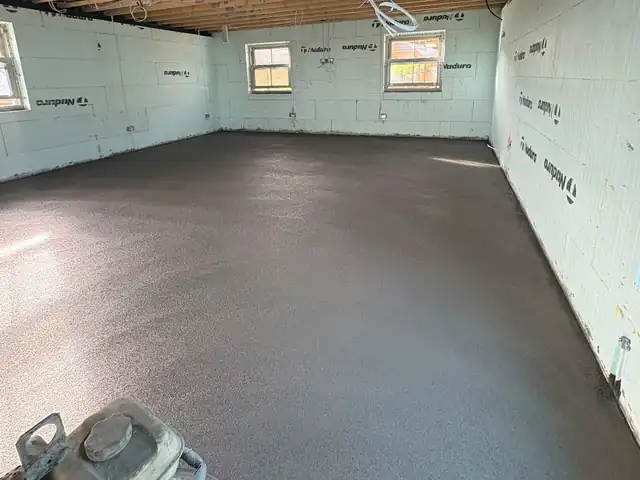
Sand and Cement Screed
Traditional sand and cement screed is our number one.
More on sand and cement screed →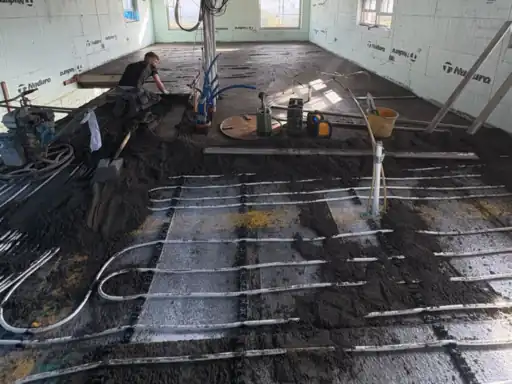
Underfloor Heating Screed
Most of the floors we lay go over underfloor heating.
More on underfloor heating screed →More guides
How Much Does Floor Screeding Cost in Ireland?
Screeding is usually priced per square metre, but the rate depends on a handful of things about your floor.
Read the guide →GuideHow Long Does Screed Take to Dry?
There are two answers: when you can walk on it, and when it's dry enough for floor coverings.
Read the guide →GuideHow Much Screed Do You Need Over Underfloor Heating?
Get the depth wrong and you'll either crack the floor or slow the heating down.
Read the guide →Tell us about your floor
Send the details and we'll come back to you with a site visit and a price. The form opens WhatsApp with your message ready to send.
- Site visit before we price
- Clear price agreed before we start
- Laser-levelled finish
Rather talk? Ring 086 838 2613 or email info@jamfloorscreeding.com.