
Limecrete Floors for Old and Stone Houses
If you're renovating an old stone house, the floor matters more than most people think. Get it wrong and you can push damp straight into the walls.
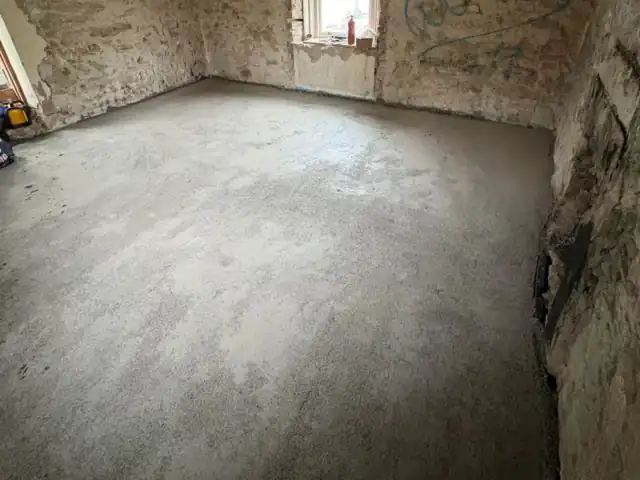
Why old houses need a breathable floor
Old stone and solid-wall houses were built without damp-proof membranes. Moisture from the ground escapes through the floor and walls. Seal the floor with concrete and a membrane, and that moisture has nowhere to go but up into the walls, where it shows up as damp, flaking plaster and rotting skirting boards.
What limecrete is
Limecrete is a lime-based concrete. It's usually laid over a layer of loose insulating aggregate, such as expanded clay or recycled foamed glass, which stops ground moisture wicking up while still letting the floor breathe. A lime screed can then give the finished, level surface.
Underfloor heating in a limecrete floor
Underfloor heating can go into a limecrete floor, and it suits old houses that are slow to heat. The pipes sit within the lime layers.
Protected structures
If the house is a protected structure, the floor build-up may need sign-off from the conservation officer. We'll work to their spec or your architect's.
Typical limecrete floor build-up
- Dig out to the right depth, without undermining old walls
- Breathable membrane over the ground
- Layer of loose insulating aggregate, such as expanded clay or recycled foamed glass
- Limecrete slab, with underfloor heating pipes if you're having them
- Lime screed or a breathable finished floor
Depths depend on the house, the ground and the insulation you choose.
What to avoid in an old house
- Cement-based concrete or screed laid wall to wall
- Plastic damp-proof membranes under the floor
- Sealed floor coverings like vinyl over a lime floor
- Cement plaster repairs at the base of old walls
All of these stop the building breathing and push moisture into the walls.
Combining old and new
Plenty of renovations add a modern extension to an old house. The extension can have a standard insulated slab and underfloor heating screed, while the original rooms get limecrete. The detail where the two floors meet matters, so we'll go through it with you.
Is limecrete right for my house?
- Yes, usually: stone cottages, farmhouses and solid-wall period houses
- Yes, usually: houses already showing damp at the base of the walls
- Probably not needed: modern cavity-wall houses with a damp-proof course
- Ask us: extensions on old houses, where the two floors meet
More on our lime screed and limecrete work.
From JAM Floor Screeding, Portlaoise. Over 20 years laying screed across Leinster. Figures here are typical guidance; your floor's spec and the manufacturer's data sheet always come first.
Questions we get asked
Is limecrete more expensive than concrete?
Usually yes, in material and time. In an old house it's often the difference between a dry house and a damp one.
Can you put tiles or timber on limecrete?
Yes, as long as the floor covering lets moisture through. Natural stone and terracotta suit well. Sealed vinyl doesn't.
How long does limecrete take to cure?
Lime cures more slowly than cement, so allow longer before floor coverings go down, and don't let it dry out too fast.
Screeds mentioned in this guide
Lime Screed & Limecrete
Old stone and solid-wall buildings need to breathe.
More on lime screed & limecrete →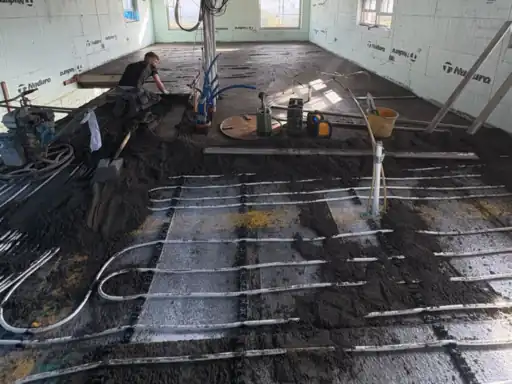
Underfloor Heating Screed
Most of the floors we lay go over underfloor heating.
More on underfloor heating screed →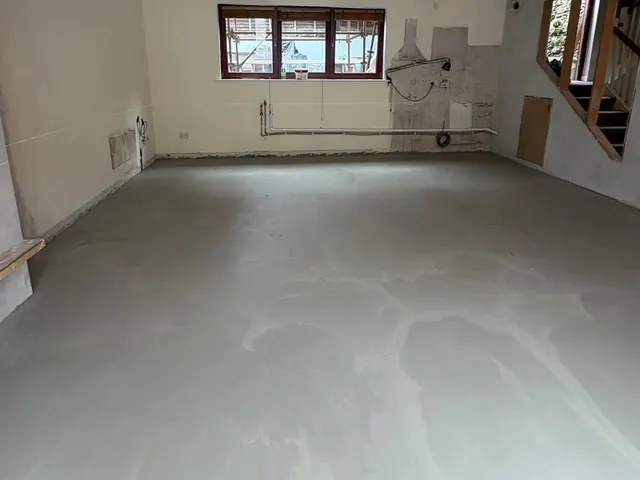
Floor Levelling
Uneven, sloping or patched floors levelled flat with latex screed, self-levelling compound or a bonded screed, ready for tiles, timber, vinyl or carpet.
More on floor levelling →More guides
How Much Does Floor Screeding Cost in Ireland?
Screeding is usually priced per square metre, but the rate depends on a handful of things about your floor.
Read the guide →GuideHow Long Does Screed Take to Dry?
There are two answers: when you can walk on it, and when it's dry enough for floor coverings.
Read the guide →GuideHow Much Screed Do You Need Over Underfloor Heating?
Get the depth wrong and you'll either crack the floor or slow the heating down.
Read the guide →Tell us about your floor
Send the details and we'll come back to you with a site visit and a price. The form opens WhatsApp with your message ready to send.
- Site visit before we price
- Clear price agreed before we start
- Laser-levelled finish
Rather talk? Ring 086 838 2613 or email info@jamfloorscreeding.com.